Amihan
Northeast monsoon
Roughly November to FebruaryThe cooler, drier air of the Philippine winter months. This is the season most travellers picture when they picture Palawan, and it is the wider dry window across the province.
Palawan does not have one season. It is a very long province carrying two different rainfall patterns inside it, and for a trip built on road transfers and sea crossings the useful question is not “will it rain” but “will the boats run”. Roads run in all seasons. Water does not.
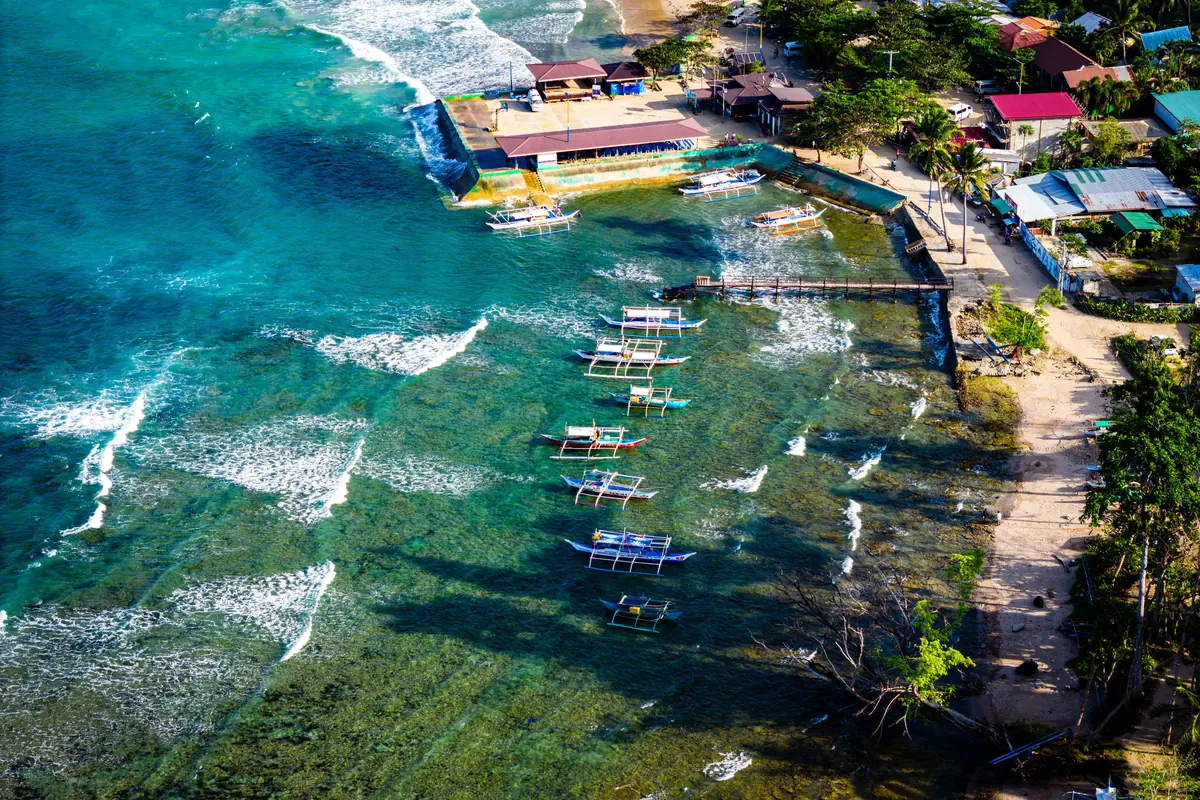
The Philippine year runs on two monsoons and the gap between them. The month boundaries shift from year to year — treat these as patterns to plan around, not dates to book against.
Northeast monsoon
Roughly November to FebruaryThe cooler, drier air of the Philippine winter months. This is the season most travellers picture when they picture Palawan, and it is the wider dry window across the province.
Between the monsoons
March to early JuneSea voyages around Palawan are most favourable in this window, when the seas are at their calmest. If your itinerary depends on a crossing or on boat tour days, this is the stretch worth building around.
Southwest monsoon
Roughly May or June through OctoberMoist air is carried onto the western side of the archipelago and brings the heavy rain of the middle of the year. The country as a whole also sees its most dangerous storms between July and October.
The province officially carries two climate patterns, split by coast. This is the fact most Palawan trip plans miss: the capital you fly into and the beaches you fly in for do not share a rainy season, so a forecast for one is not a forecast for the other.
El Nido, Nacpan Beach, Port Barton, San Vicente, the Calamianes, Balabac
Pattern: Two distinct seasons — one dry, one wet.
This is the side of the province with a real rainy season, and it is where most of the beaches and every boat tour day sit. Northern Palawan, including Busuanga and the Calamianes, sees torrential rain during July and August.
El Nido and the west coastPuerto Princesa, Honda Bay, Sabang and the Underground River corridor
Pattern: A short dry season of one to three months, and no pronounced rainy period after it.
The capital does not share the west coast’s rainy season. Rain here is spread through the year rather than concentrated, which is why a Puerto Princesa base holds up better than a Bacuit Bay base in the wetter months.
Puerto Princesa as a baseThe far south behaves differently again: the southern part of the province is virtually free from tropical depressions, which is why a Balabac trip is more often limited by sea state than by storms.
Season is not a yes-or-no answer for a whole trip. It applies leg by leg, and the split is simple: anything on a road is available all year, anything on open water is a decision taken locally on the day.
A weather-flexible itinerary needs a spare day, not a spare hour. If a crossing or a tour is postponed, the day behind it is the one that absorbs it — which is the same reason we suggest never putting a same-day onward flight behind the El Nido to Coron crossing.
We do not publish forecasts, sailing schedules, crossing durations or fares. Sea state, operator decisions and the season all move them, and a figure published today would mislead someone travelling in a different month.
If your trip includes boat days — Bacuit Bay, Honda Bay, the El Nido to Coron crossing or Balabac — the strongest window is March to early June, when seas around the province are at their calmest. The wider dry season runs with the amihan, the northeast monsoon of roughly November to February, which is cooler and drier. If your trip is mainly road-based around Puerto Princesa, the season matters far less: those transfers run year round.
No, and this is the fact most trip plans miss. Palawan officially has two climate patterns. The entire western coast plus the far north and far south — El Nido, Nacpan, Port Barton, San Vicente — have two distinct seasons, dry and wet. The eastern coast, including Puerto Princesa, has only a short dry season and no pronounced rainy period for the rest of the year. A forecast for the capital is not a forecast for the beaches.
It depends on what your itinerary rests on. Road legs — the mainland corridor, airport arrivals, Sabang, Nacpan, multi-stop runs north — are available in every season. Open-water legs are the ones the weather decides. A wet-season trip built around Puerto Princesa and road-reachable days works well; a wet-season trip whose every day is a Bacuit Bay boat is the one that gets disrupted.
The Philippines as a whole sits across the typhoon belt and sees its most dangerous storms between July and October, but the province is affected unevenly. Northern Palawan, including Busuanga and the Calamianes, gets torrential rain in July and August, while the southern part of the province is virtually free from tropical depressions. No part of the Philippines is exempt, so a trip in those months should carry a spare day rather than a tight connection.
Not on the part we sold you. Where we chartered the boat — a Bacuit Bay, Coron, Port Barton or Honda Bay day — a day that cannot sail is rebooked for later in your stay or refunded. Where the boat is someone else’s, which is the case for the El Nido to Coron crossing, the Balabac crossing, the Taytay Bay and Calamianes resort boats and the Sabang boat to the Underground River, we will not pretend we can refund their sailing — but the road transfer we quoted is re-timed or rebooked for when it does go rather than written off. Two limits worth knowing before you plan tightly: it is the part that did not happen rather than the whole trip, and we cannot cover knock-on costs such as a missed onward flight or an unused hotel night. Which is the real reason to keep a spare day behind an open-water leg — the refund protects the fare, only the spare day protects the trip.
March to early June is when seas are most favourable, so that is the window we would build a crossing-dependent itinerary around. Whatever month you choose, treat the crossing as a whole travel day with nothing booked behind it — it is open water rather than a sheltered bay hop, and it can be moved at short notice in any season. We quote the road transfers at both ends and will tell you where the crossing sits in your plan.
Send the month you are travelling and the places on your list, and we will say which legs are road transfers that run whatever the weather does, and which sit on open water and want a spare day behind them — then quote the private road legs that hold the itinerary together.
Not sure of your exact dates yet? Ask anyway — the travel date on the form is what we price against, not a commitment, so send your best estimate and we will tell you what the trip costs and whether it works. If the date moves, tell us and we re-quote it.
Travelling sooner than you can plan? There is no minimum notice here — if you are already in Palawan or you land the day after tomorrow, ask anyway. We reply the same day, usually within a few hours, and we will tell you straight whether your leg can be staffed in the time available rather than leaving you on a maybe.
Free, no obligation, and no payment to ask. If a leg does not make sense on your dates, we will say so rather than sell it to you.